As an Amazon Associate this site earns from qualifying purchases.
Specification comparison
| Product | Price | Length | Height | Frame | Mount style | Notes |
|---|---|---|---|---|---|---|
| OCBAiLi Bed Rail (Gray, 4 Packs) | Check price on Amazon | 78.7 in total | Not stated | Iron pipes, cotton-wrapped pearl cotton cushions | Frame slides under mattress; retractable support bars | Removable washable cover; states international certification |
| Smashier Bed Rail Bumpers Protector | Check price on Amazon | 3 ft (2.3 ft also offered) | Adds height to existing rail | High-density foam, soft fabric | Slots over an existing guardrail (2–5 cm slot) | CPC certified; machine-washable cover; 48 hr foam expansion |
| strentiki Toddler Bed Guard Rail | Check price on Amazon | Not stated | Not stated | Square steel frame, foam-wrapped tubes, mesh fabric | U-shaped base ~17 in wide, tool-free | Removable fabric cover |
| NUTIKAS Baby Bed Rail Guard | Check price on Amazon | 35.1 in | 26–34.7 in adjustable | Steel, mesh panel | Swing-down; 12 in width; USPTO patent approved | Folds up, does not touch floor |
| UNAPHO Bed Rail for Toddlers | Check price on Amazon | 40 in | 26–31 in adjustable | Steel, U-shaped base, mesh panel | Swing-down; screws + adjustable anchor strap; 1.6–8.7 in mattress range | Detachable, washable, foldable mesh |
Quick answer: Most manufacturers and the U.S. CPSC say the top bunk isn't appropriate for children under 6, so a 5-year-old belongs on the bottom bunk. Childproofing a bunk bed means checking that the factory guardrails run the full length of both open sides with less than 3.5 inches of gap, that the ladder is bolted (not hooked) on, and that nothing hangs from the frame. Aftermarket rails like the OCBAiLi Bed Rail, Bed Rail for Toddlers, Kid, 78.7 Inch Bed Side Rails Safety for Queen, King, Full, Twin, Bunk, Dorm Beds to Prevent Falls, Bed Barrier for Dogs, Easy Installation (Gray, 4 Packs) are for the bottom bunk and standard kids' beds — they are not a substitute for a missing top-bunk rail.
That last point is the one people get wrong. If your top bunk's built-in rail is broken, missing, or sits lower than 5 inches above the mattress top, the fix is a replacement part from the bed's manufacturer or a different bed — not a clip-on toddler rail.
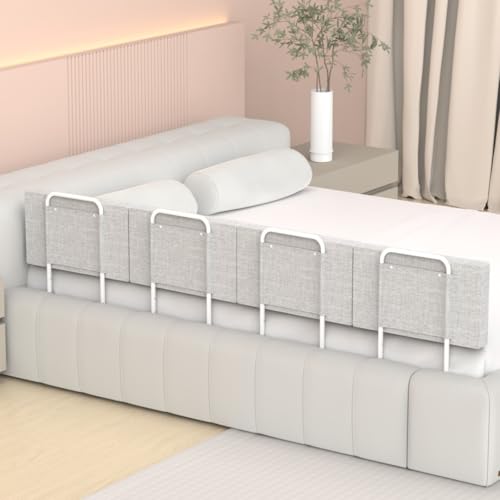
- SAFETY FIRST: The bed rails is sturdy. provides a protective barrier around your kid's bed to prevent them from falling or rolling out of bed while sleeping. Unique bedrail design
- STURDY AND DURABLE: The support bars of the bed rail are made of sturdy and durable iron pipes and the cushions are made of cotton fabric wrapped in this pearl cotton. Our kids
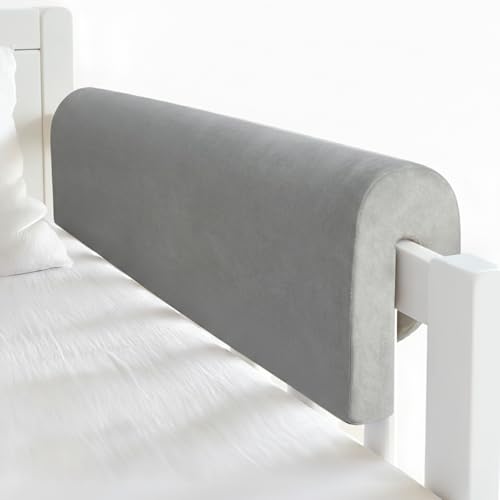
- 【Enhanced Safety - Anti-Collision & Increased Guardrail Height】Our upgraded children's bed rail bumpers protector is made of high-density foam, which provides a cushioned barrier
- 【CPC Certified & Cuddly Soft — Safe from the Inside Out】Made from ultra-soft, skin-friendly fabric and high-density foam, this bumper ensures gentle protection and comfort for
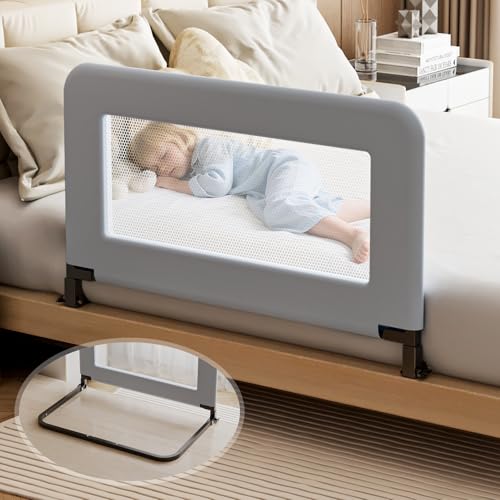
- 【Wider U-shaped Base for More Stability】Our toddler bed rail features an extra-wide U-shaped base, wider than the standard design base, reaching approximately 17 inches wide, it
- 【Easy & Quick Installation】This toddler bed rail is designed for tool-free installation that can be completed in minutes, saving you time and energy, ensuring your baby sleeps
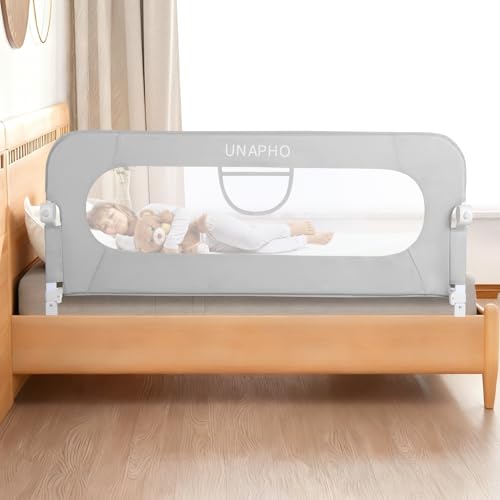
- Swing Down Design Toddler Bed Rail: This baby bed rail guard features a curved pull-down design that easily adapts to the bed frame. With the swing-down feature, getting in and
- Fit for Most Bed Types and Sizes: The bed rails’ overall size is 40”(L)X26~31”(H). The heights can be adjustable from 1.6 inch to 8.7 inch,and easily raised, lowered, and locked
What age is actually safe for a bunk bed?
Two separate questions hide inside "what age for bunk beds."
Finding the right how to childproof bunk beds kids beds comes down to matching the features to how you will actually use it.
Sleeping on the bottom bunk: fine from roughly the age a child moves out of a crib, around 2 to 3, treated exactly like any other low bed. Add a rail, keep the floor clear, done.
Sleeping on the top bunk: the widely cited threshold is 6 years old, and it's about developmental capacity, not size. A 6-year-old can generally wake up disoriented at 2 a.m. and still navigate a ladder. A 4-year-old often can't. If you're searching "bunk beds for 5 year olds," the honest answer is that a 5-year-old sleeps on the bottom — the bunk itself is fine, the top bunk isn't yet.
Two more rules worth memorizing: never put a child on the top bunk of a bed with a ceiling clearance under about 30 inches, and never let anyone use the top bunk if they weigh more than the frame's stated capacity. Check your bed's manual for that number.
The childproofing checklist
- Guardrails on both sides of the top bunk, even the wall side. Mattresses shift; kids roll into the gap and get trapped.
- Rail height: at least 5 inches of rail above the top surface of the compressed mattress. If you upgraded to a thicker mattress, you may have quietly eliminated this margin.
- Gaps under 3.5 inches anywhere in the structure — between rail and mattress, between ladder rungs and frame, in the headboard. This is the head-entrapment number.
- Ladder bolted, not hooked. Hook-on ladders slide off under a climbing child.
- Nothing tied, hung, or looped on any part of the frame — jump ropes, belts, scarves, cords. Strangulation on bunk frames is a real, documented hazard.
- Bed away from ceiling fans, light fixtures, and windows. Move the window blind cords out of arm's reach.
- Slats fully supported and screwed down, not just resting. Kids bounce.
- Re-tighten every bolt every few months. Bunk beds loosen faster than any other furniture in the house.
- Soft landing zone — a rug, not a toy box, beside the ladder.
Who aftermarket bed rails are for
Buy an add-on rail if you have a child roughly 2 to 6 sleeping on a bottom bunk, a standard twin or full, a daybed, or a loft-style floor bed, and the frame has no built-in barrier. They're also sensible for a child who has just moved out of a crib and doesn't yet have a reliable sense of the bed's edge, or a heavy sleeper who rolls.
Padding-style products are for a slightly different family: you already have a guardrail, but your child bangs into it, or it's an inch or two shorter than you'd like.
Who should skip aftermarket bed rails
Skip them if you're trying to make an unsafe top bunk safe — that's not what these products do, and none of the listings above claim to replace a structural top-bunk rail. Skip them if your child is over 6 and has never fallen out of bed; you'll spend $30 to make the bed harder to get into. Skip clamp-under-mattress rails entirely for a child under 2 in a crib-to-bed transition unless the fit is genuinely gapless, because a rail that leaves a channel between itself and the mattress creates the exact entrapment hazard you're trying to prevent. And skip them on a platform bed with a deep recessed frame where the rail's base can't sit flat under the mattress.
Honest trade-offs
Every rail is a compromise between "hard to fall out of" and "easy to get into." Swing-down designs like the NUTIKAS and UNAPHO models solve this at the cost of a moving part your child will eventually figure out how to operate themselves. Fixed rails are simpler and have nothing to fail, but a child who gets up at night has to climb.
Length matters more than people expect. A 35-inch rail on a twin bed leaves a lot of uncovered mattress. Position it so it covers the hip-to-shoulder zone rather than centering it aesthetically.
Anchor straps are worth having on a slatted or box-spring bed, where a simple under-mattress bar can slide. They add a few minutes to installation and a strap you'll have to undo every time you change sheets.
Finally: no rail eliminates falls. It reduces them. On a bottom bunk that's a 12-inch drop. That's the whole argument for keeping younger kids down there.
What to check on the listing before you buy
- Current price and pack count. The OCBAiLi listing is priced for a 4-pack at $99.74; single-rail listings from the same brand will read differently. Confirm what's in the box.
- Variant. The Smashier bumper comes in 2.3 ft and 3 ft; the 3 ft gray single-pack is the one priced at $29.99. Length and color selectors change the price.
- Slot or mattress-thickness compatibility. Smashier states a 2–5 cm installation slot; UNAPHO states a 1.6–8.7 inch height adjustment. Measure your rail thickness or mattress depth first.
- Warranty and returns. None of these listings state a warranty term in the data available, so read the seller's return window on the page itself.
- Reviews. Read them yourself, specifically filtering for your bed type — bunk, platform, or slatted. That's where fit problems show up.
Alternatives worth considering
Smashier Toddlers' Bed Rail Bumpers Protector — consider instead if…
…you already have a guardrail and the problem is impact, not falls. The Smashier Toddlers' Bed Rail Bumpers Protector, Children's Bed Guardrail Padding, Soft Cushioned Barrier, Increased Height, Easy to Install, Washable Cover, Fits Floor, Bunk & Loft, 3 Ft, Gray, 1Pack slides over an existing rail. Per the product listing, it uses high-density foam and adds guardrail height, it's CPC certified — meaning it's certified as compliant with children's product safety rules — and the cover is machine washable.
strentiki Toddler Bed Guard Rail — consider instead if…
…stability on a soft or thick mattress is your main worry. The strentiki Toddler Bed Guard Rail for Baby - Sturdy Metal Safety Rail for Twin, Crib, Queen, Bunk, Full Side Beds - Kids Guardrail Protector uses a U-shaped base roughly 17 inches wide, spreading load over a larger area than a narrow base. Square steel frame, foam-wrapped tubes, breathable mesh, removable cover, no tools.
NUTIKAS Baby Bed Rail Guard — consider instead if…
…you need the tallest option and a quiet swing-down. The NUTIKAS Baby Bed Rail Guard for Toddlers - 35.4" Toddler Bed Rails for Crib,Twin,Full, Queen Bunk Size Bed Swing Down Bedrail Extral Tall Child Safety Side Railing Guards for Kids adjusts from 26 to 34.7 inches tall across a 35.1-inch length, and folds up without touching the floor.
UNAPHO Bed Rail for Toddlers — consider instead if…
…you want the longest coverage plus a bolt-and-strap anchor. The UNAPHO Bed Rail for Toddlers,Swing Down Kids Bed Rails Guard for Twin,Full,Queen,Bunk Size Bed,Extra Tall Child Bed Rail Guard with Reinforced Anchor Safety System,Grey runs 40 inches long, 26–31 inches tall, and ships with threaded screws and an adjustable anchor strap for slatted, box-spring, or wooden-base beds.
FAQ
Can a 5-year-old sleep in a bunk bed? On the bottom bunk, yes. The top bunk is generally not recommended under age 6. If you're buying a bunk for a 5-year-old and an older sibling, assign the top to the older child.
Do I need a rail on the bottom bunk? Most bunk beds don't include one, and most bottom bunks sit low. If your child is under 6 or rolls in their sleep, add one. Check that the rail's under-mattress frame clears the bunk's side rails first.
Are these rails safe for cribs? Several listings mention crib compatibility, but standard guidance is that nothing should be added inside a crib. Wait for the toddler-bed transition.
How do I stop a child climbing to the top bunk unsupervised? Remove or block the ladder at night if it's detachable, and keep the door within earshot. There's no accessory that reliably prevents a determined climber.
Related guides
- The Best Platform Bed Frames for Every Budget
- Best beds and bedroom furniture - bed frames, platform beds, headboards, bunk beds, kids beds, daybeds, nightstands, dressers, chest of drawers, wardrobes for Families
- How to Lower Your Best beds and bedroom furniture - bed frames, platform beds, headboards, bunk beds, kids beds, daybeds, nightstands, dressers, chest of drawers, wardrobes Costs
Key Takeaways
- Choosing the right how to childproof bunk beds kids beds means matching the key features to your specific needs and budget
- Read real customer reviews and check the return policy before you commit
- Compare value across models — the priciest option is not always the best fit