As an Amazon Associate this site earns from qualifying purchases.
Sizing up the resources on this page
None of the items below are furniture — they're the books people buy alongside a new dresser when the problem turns out to be the stuff, not the storage. Here's what the listings state.
| Title | Brand | Price | Format focus | Features listed |
|---|---|---|---|---|
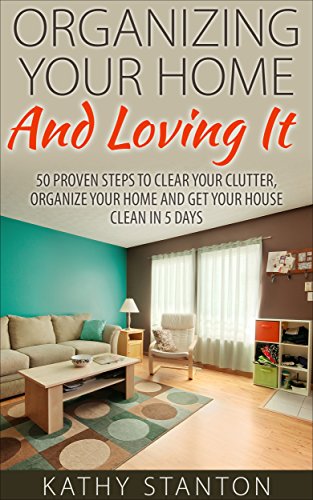
| Organizing Your Home And Loving It: 50 Proven Steps To Clear Your Clutter, Organize Your Home And Get Your House Clean In 5 Days (Simple Living, How to ... Home Organization, Decluttering Techniques) | Not stated | Check price on Amazon | Whole-home, 50 steps, 5-day frame | Not stated |
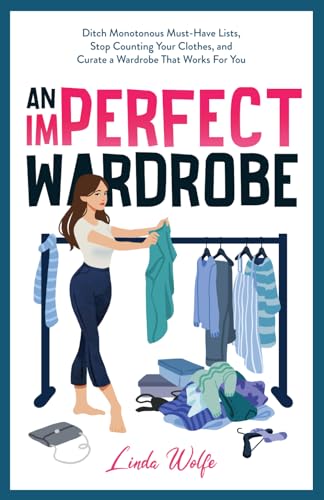
| An Imperfect Wardrobe: Ditch Monotonous Must-Have Lists, Stop Counting Your Clothes, and Curate a Wardrobe That Works For You (The Imperfect Series) | Majosta | Check price on Amazon | Wardrobe curation | Not stated |
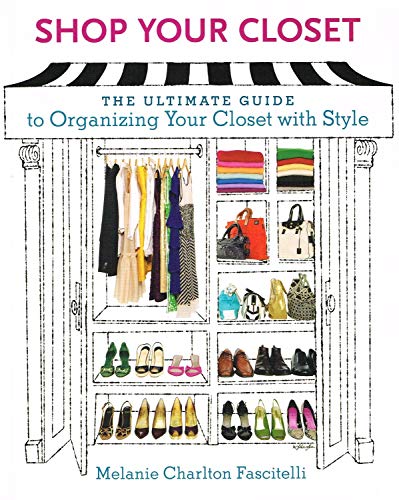
| Shop Your Closet: The Ultimate Guide to Organizing Your Closet with Style | William Morrow | Check price on Amazon | Closet organizing | Not stated |
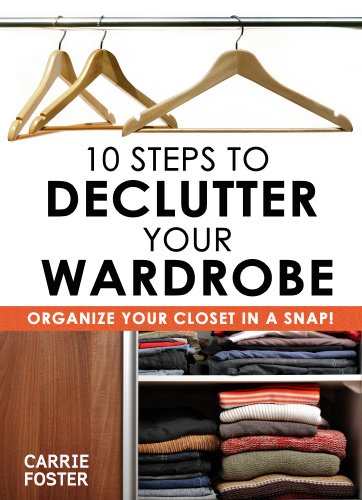
| 10 Steps to Declutter Your Wardrobe: Organize Your Closet in a Snap! | Not stated | Check price on Amazon | Wardrobe decluttering, 10 steps | Not stated |
Quick answer: Organize by frequency, not by category — the drawer at hand height gets what you touch daily, the bottom drawer gets seasonal and rarely-worn items, and the top of the dresser gets a hard cap of three or four objects plus one tray to catch everything else. File clothes vertically instead of stacking them so you can see the whole drawer at a glance. The wardrobe holds only what hangs; the chest holds only what folds, and anything that doesn't have a home in either one is the thing you actually need to get rid of.
The two questions people bring to this page are almost always the same: how do I organize a dresser, and what do I do about the top of it. Both have the same root cause. Bedroom storage fails when it becomes undifferentiated — one drawer for "shirts," one for "everything else," and a flat surface that collects whatever your pockets held at 11pm. The fix is boring and it works: assign every zone a job, size the job to the zone, and put a physical limit on the surfaces.
Finding the right how to organize dresser chest wardrobe comes down to matching the features to how you will actually use it.
The three-piece system
You likely own some combination of a dresser (wide, shallow drawers), a chest of drawers (tall, narrower, deeper), and a wardrobe or closet. They are not interchangeable and treating them as one big pile of storage is where most people go wrong.
The dresser is wide and shallow, which makes it the file cabinet of your bedroom. Shallow drawers are perfect for vertical folding — t-shirts, underwear, socks, workout clothes — because you can see every item's edge without excavating. Put the drawer you open every single morning at chest or waist height. Bending to a bottom drawer twice a day is a small tax you pay forever.
The chest of drawers is tall and deep, which makes it the bulk-storage piece. Sweaters, jeans, sweatshirts, extra bedding. Deep drawers are terrible for small items — they swallow socks — so if you're using a chest for anything small, add dividers or shallow bins to create a false bottom.
The wardrobe holds only things that must hang: anything that wrinkles, anything structured, anything you'd have to iron after folding. Everything else belongs in a drawer. The single most common wardrobe mistake is hanging t-shirts, which stretches the shoulders and eats rail space that a blazer actually needed.
The listings don't state page counts, formats, or publication dates for these, so check that on the product page yourself — a $2.99 price usually signals an ebook, but the listing is where you confirm it.
The actual method
Empty the drawer completely. Not "tidy it" — empty it onto the bed. You cannot organize around a pile you haven't looked at. This is the step people skip and it's the reason the system collapses in three weeks.
Sort into four piles: keep, repair, donate, bin. Be ruthless about the repair pile — if something has been "waiting for a button" for over a year, it's a donate item wearing a disguise.
Fold vertically. Fold the garment into a rectangle roughly the height of your drawer's interior, then stand it on its edge. Every item is visible. Nothing gets buried. This one change does more than any product you can buy.
Add dividers. Drawer dividers or small open bins stop vertical files from slumping. Cardboard boxes cut to height work fine and cost nothing.
Assign zones by height. Waist-height drawer = daily. Upper drawers = frequent but not daily. Bottom drawers = seasonal, occasion wear, spare bedding.
Cap the top surface. For the top of a dresser, the rule that survives real life is: one lamp or mirror, one tray, one decorative object, and nothing else. The tray is the pressure valve — keys, watch, loose change, receipts all land in the tray, and you empty the tray weekly. Without a tray, the entire dresser top becomes the tray.
Who these books are for
If the physical act of organizing isn't the problem — you know how to fold, you just have far more clothing than furniture — a decluttering book is genuinely the cheaper fix than buying another chest of drawers. An Imperfect Wardrobe and 10 Steps to Declutter Your Wardrobe both frame the problem as wardrobe curation rather than storage, which is the right framing when your drawers are full of things you don't wear.
If your bedroom is a symptom of a whole-house issue, the 50-step, five-day structure of Organizing Your Home And Loving It is the broader scope.
Who should skip these
Skip them if your storage genuinely is undersized — a studio apartment with one narrow chest and a winter coat problem is a furniture problem, not a mindset problem. No book adds cubic feet. Skip them too if you've read this kind of book before and didn't act on it; a second one won't change that. And skip the whole-home title if you only want the bedroom sorted, since you'd be paying for kitchen and garage chapters you'll never open.
Honest trade-offs
These are short, inexpensive guides, and the listings don't state page counts, so calibrate expectations — a $2.99 ebook is a focused read, not a reference manual. There's substantial overlap between the two wardrobe-specific titles; buying both is probably redundant. And decluttering advice is inherently repetitive across the genre, so if you've already absorbed the core ideas from elsewhere, the marginal value drops sharply. Go read the reviews and the sample chapter before you commit, even at these prices.
What to check on the listing before you buy
- Current price. All four prices above were captured at one moment. Ebook pricing in particular moves constantly.
- Format and variant. Confirm whether you're buying Kindle, paperback, or audiobook — these can share a listing page and the price you see may be for a different format than the one you want.
- Length and edition. Not stated in the data here, so verify on the page.
- Return and refund terms. Digital purchases have their own return window, distinct from physical goods.
- Reviews. Read them yourself, and specifically look for reviewers whose situation resembles yours.
Consider instead if…
Organizing Your Home And Loving It: 50 Proven Steps To Clear Your Clutter, Organize Your Home And Get Your House Clean In 5 Days (Simple Living, How to ... Home Organization, Decluttering Techniques) — consider instead if…
…the bedroom isn't the only room in trouble. This one is scoped to the whole home across 50 steps with a five-day frame, at $2.99. Choose it if you want one plan covering every room rather than a wardrobe-only deep dive. Organizing Your Home And Loving It: 50 Proven Steps To Clear Your Clutter, Organize Your Home And Get Your House Clean In 5 Days (Simple Living, How to ... Home Organization, Decluttering Techniques)
An Imperfect Wardrobe: Ditch Monotonous Must-Have Lists, Stop Counting Your Clothes, and Curate a Wardrobe That Works For You (The Imperfect Series) — consider instead if…
…you bounce off rigid capsule-wardrobe rules. The premise, per its own title, is rejecting must-have lists and item counts in favor of a wardrobe built around you. At $12.99 from Majosta, it's the pick if prescriptive systems have failed you before. An Imperfect Wardrobe: Ditch Monotonous Must-Have Lists, Stop Counting Your Clothes, and Curate a Wardrobe That Works For You (The Imperfect Series)
Shop Your Closet: The Ultimate Guide to Organizing Your Closet with Style — consider instead if…
…your closet is the bottleneck rather than your drawers, and you care about the styling side as much as the sorting side. $12.00, from William Morrow. Shop Your Closet: The Ultimate Guide to Organizing Your Closet with Style
10 Steps to Declutter Your Wardrobe: Organize Your Closet in a Snap! — consider instead if…
…you want the shortest possible path. Ten steps, wardrobe-only, $2.99. This is the low-commitment option for someone who wants a checklist this weekend rather than a philosophy. 10 Steps to Declutter Your Wardrobe: Organize Your Closet in a Snap!
FAQ
How do I organize the top of a dresser so it stays clear? Give it a hard object limit — roughly three items plus one catch-all tray — and empty the tray on a fixed day each week. The top of a dresser fills up because nothing on it has a designated home. A tray gives the clutter a home, and a weekly empty stops the home from becoming permanent.
Should clothes be folded or rolled in a drawer? Folded into rectangles and stood on edge, in most cases. Rolling works for soft, unstructured items like t-shirts and leggings but tends to crease button-downs and anything with structure. The real win is that both methods make items visible from above, unlike stacking.
What goes in a wardrobe versus a chest of drawers? Wardrobe: anything that wrinkles or has structure — shirts, dresses, jackets, trousers you want creased properly. Chest of drawers: knitwear, denim, sweatshirts, anything heavy enough that hanging would stretch it out of shape.
My drawers are organized but still overflowing. Now what? That's a volume problem, not a layout problem, and no amount of folding technique fixes it. Either reduce what you own or add storage. The decluttering titles above target exactly this situation, and they're a lot cheaper than a second chest of drawers.
Related guides
- Best Options for Best beds and bedroom furniture - bed frames, platform beds, headboards, bunk beds, kids beds, daybeds, nightstands, dressers, chest of drawers, wardrobes
- FAQ: Best beds and bedroom furniture - bed frames, platform beds, headboards, bunk beds, kids beds, daybeds, nightstands, dressers, chest of drawers, wardrobes
- The Best Platform Bed Frames for Every Budget
Key Takeaways
- Choosing the right how to organize dresser chest wardrobe means matching the key features to your specific needs and budget
- Read real customer reviews and check the return policy before you commit
- Compare value across models — the priciest option is not always the best fit