Top Picks


Reviewed by the Editorial Team
Last Updated: June 2026 | Written by the Editorial Team
When shopping for nightstand buying guide, it pays to compare specs, capacity, and real-world runtime before committing.
A nightstand seems like one of the simplest pieces of furniture in your home until you actually shop for one. Then suddenly you are weighing drawer counts against open shelves, agonizing over whether 24 inches is too tall for your platform bed, and wondering if you really need USB ports built into the side. This nightstand buying guide walks through every decision that matters so you can pick a bedside table that fits your bed, your room, and the way you actually live.
Our editorial team independently researches bedroom furniture using manufacturer specifications, industry sizing standards from organizations like ASTM International, retailer return data, and direct hands-on evaluation in showrooms and home setups. The recommendations below are framed around generic features and categories so you can apply them to whichever specific nightstand you ultimately choose.

Why This Guide Matters
Most people buy a nightstand the same way they buy a trash can: they grab something that looks fine, get it home, and only then discover the drawer slides stick, the top is too low to comfortably reach a glass of water, or the finish chips the first time a phone charger scrapes across it. A bedside table is something you interact with dozens of times a day, in the dark, half-asleep, often one-handed. Small design flaws compound fast.
By the end of this guide you will understand:
- The correct height relationship between your mattress and nightstand
- How to measure for width and depth without crowding your bed
- Which materials hold up to nightly use and which look great for six months then fall apart
- Whether drawers, open shelves, cabinet doors, or hybrid storage fits your habits
- Common buying mistakes that cause returns
- Honest price expectations across budget, mid-range, and premium tiers
Types of Nightstands Explained
Nightstands come in roughly six distinct categories. Each solves a different problem, and matching the type to your room is the single biggest decision you will make.
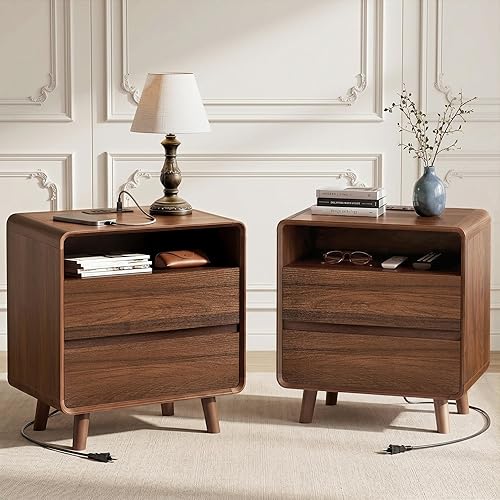
| Type | Typical Footprint | Storage | Best For |
|---|---|---|---|
| Traditional drawer nightstand | 20-24 in wide, 16-18 in deep | 2-3 drawers | Hiding clutter, classic bedroom looks |
| Open shelf / cube | 18-22 in wide, 14-16 in deep | 1-2 open shelves | Minimalist rooms, books, decor |
| Cabinet nightstand | 20-26 in wide, 16-20 in deep | Door with interior shelf | Larger items, CPAP machines, medical supplies |
| Floating / wall-mounted | 14-30 in wide, 8-12 in deep | Single shelf or drawer | Small rooms, robot vacuum clearance |
| Pedestal / drum table | 16-20 in diameter | None or small shelf | Tight spaces, accent style |
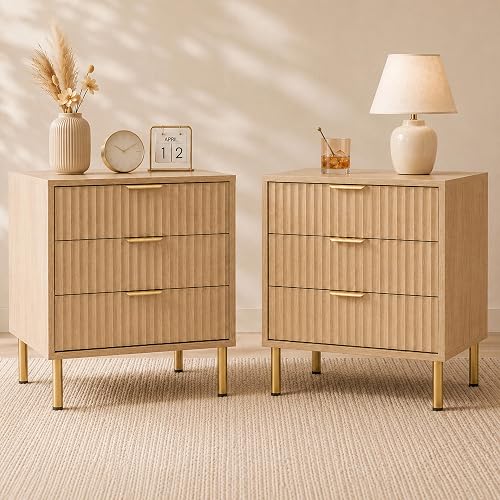
| Three-drawer chest nightstand | 24-30 in wide, 18-22 in deep | 3-4 drawers | Doubles as dresser overflow |
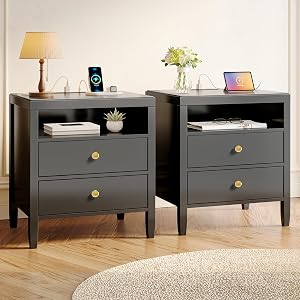
A traditional two-drawer nightstand remains the default for good reason: the top drawer hides medications, chargers, and remotes, while the bottom drawer or shelf handles books and bulkier items. Open-shelf designs photograph beautifully but force you to keep everything tidy, which most sleep-deprived humans cannot maintain. Cabinet-style units are underrated for anyone with a CPAP, supplemental oxygen, or a tangle of charging cables that needs to disappear behind a door.
Floating nightstands deserve special mention. They free up floor space, make vacuuming trivial, and look modern, but installation requires hitting a stud or using rated drywall anchors. A floating unit rated for 25 pounds will not survive someone leaning on it to get out of bed.
Nightstand Height Guide
Here is the rule almost every buyer gets wrong: the top of your nightstand should sit roughly even with the top of your mattress, or within two to three inches above it. Not the top of the bed frame. Not the top of the headboard. The mattress surface.
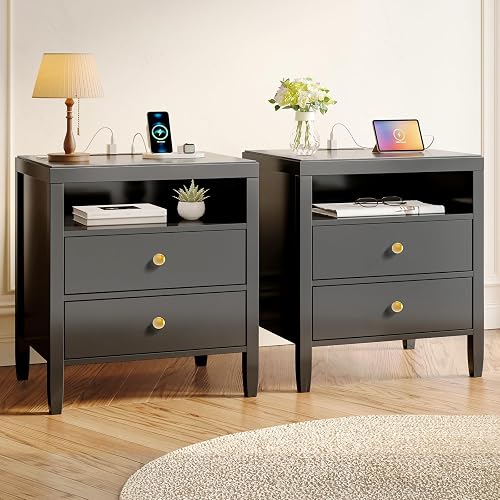
Why does this matter? Reaching down to a low surface in the dark for a glass of water leads to spills. Reaching up onto a too-tall surface forces you to sit up, breaking sleep. The standard mattress sits between 24 and 27 inches off the floor once you add a box spring or foundation, which is why most nightstands measure between 24 and 28 inches tall.
Here is a quick reference based on common bed setups:
- Platform bed with low-profile mattress (18-22 in total height): Look for a nightstand 20-24 inches tall
- Standard bed with foundation and standard mattress (24-27 in): Look for 24-28 inches tall
- Tall mattress, pillow-top, or adjustable base (28-32 in): Look for 28-32 inches tall
- Loft or high-rise bed (33+ in): Consider a tall chest-style nightstand 32-36 inches tall
Bedside Table Dimensions: Width and Depth
Width follows a simple guideline: your nightstand should be narrower than your bed but wide enough to hold a lamp, an alarm clock or phone, a book, and a glass of water without items perching precariously on the edge. For a queen or king bed, 22 to 28 inches of width works well. For a twin or full, 18 to 22 inches keeps the proportions right.
Depth is where small rooms get into trouble. A nightstand that is 20 inches deep eats into walking space and can block closet doors or radiators. Measure from the wall to the edge of your mattress, then leave at least 2 inches of buffer between the nightstand and the bed frame so you can change sheets without hauling furniture around. If you have less than 18 inches of available depth, a floating nightstand or a narrow pedestal table will serve you better than forcing a traditional unit into the gap.
Also check clearance for the nightstand's opening swing. A drawer that pulls out 16 inches into a 20-inch walking lane is a stubbed toe waiting to happen, especially at 3 a.m.
Best Nightstand Features to Look For
Ranked from most important to nice-to-have, here is what actually matters once the nightstand is in your room.
1. Drawer Slide Quality
This is the single biggest predictor of whether you will love or hate your nightstand in two years. Look for full-extension ball-bearing slides rated for at least 75 pounds. Cheap nightstands use stapled wooden runners or basic roller slides that bind, sag, and eventually drop the drawer. Pull every drawer fully open in a showroom or, if buying online, read the spec sheet for the phrase 'ball-bearing slides' or 'soft-close.' If the listing does not mention slide type, assume the worst.
2. Top Surface Durability
Your nightstand top will get scratched by phone cases, splashed with water, dripped on with coffee, and burned by hot mugs at some point in its life. Solid wood with a catalyzed lacquer finish holds up best. Veneer over MDF is acceptable if the veneer is at least 0.6 mm thick and the edges are properly sealed. Pure laminate scratches easily and chips at the corners. Stone or marble tops resist water and heat but are heavy and can crack at the edges if struck.
3. Weight and Build Material
Pick up the nightstand before buying if possible, or check the shipping weight in the listing. A solid wood two-drawer nightstand should weigh at least 35-45 pounds. Anything dramatically lighter is likely particle board with a printed finish, which will swell if it gets wet and cannot be repaired. Hardwoods like oak, walnut, maple, and acacia last decades. Pine and rubberwood are softer but acceptable. MDF and particle board belong in the budget tier only.
4. Storage Configuration
Think about what you actually keep at your bedside. Books, glasses, lip balm, a phone, charging cables, a journal, a hand cream, maybe medication, maybe a CPAP. Now look at the nightstand's storage. A shallow top drawer is ideal for flat items; a deep bottom drawer holds books and bulkier objects. Cabinet doors hide larger gear but require pulling the door open and reaching in. Open shelves display things you do not mind seeing every day.
5. Cable Management
The modern bedside table holds at least one charging cable, often two or three. Look for a cord pass-through hole in the back panel, a rear cut-out, or built-in USB and USB-C ports. Nightstands with built-in wireless charging pads are increasingly common but verify the wattage matches your phone. A 5-watt pad will charge your phone overnight; a 10 or 15-watt pad keeps up with active use.
6. Hardware Feel
Drawer pulls and knobs get touched thousands of times. Solid metal hardware with smooth edges feels permanent; plastic hardware painted to look like metal feels cheap immediately and chips within months. If the nightstand uses recessed finger pulls, make sure your fingers actually fit comfortably without scraping wood edges.
7. Footprint Style
Legs versus a solid base affects both looks and cleaning. Legged nightstands let robot vacuums slide underneath and make the room feel more open. Plinth bases hide dust bunnies but trap them too. If you have pets or kids, legged units are easier to keep clean.
Common Mistakes to Avoid
After reviewing thousands of nightstand return reasons and customer complaints, these patterns appear over and over:
Buying without measuring mattress height. Already covered above, but worth repeating because it accounts for an enormous share of returns.
Matching only the bed, not the room. A walnut bed paired with a walnut nightstand sounds logical until you realize your dresser, lamps, and curtains all clash. Pick a finish that bridges the bed and the rest of the room.
Ignoring weight capacity. A nightstand top rated for 20 pounds will sag under a heavy lamp, a stack of books, and an alarm clock combined. Check the spec.
Buying matched pairs you do not need. Two identical nightstands look pristine in catalog photos but cost twice as much and limit flexibility. Consider one nightstand and one slim shelf or chair on the other side, especially if one partner needs more storage than the other.
Skipping assembly time. Most flat-pack nightstands take 45 to 90 minutes to assemble. Some require two people. Read recent reviews specifically for assembly complaints before clicking buy.
Trusting product photos for color. Wood finishes photograph wildly differently depending on lighting. Order a finish sample if the manufacturer offers one, or read reviews with user-submitted photos to see the piece in real-world conditions.
Forgetting the lamp. A nightstand with a 16-inch deep top might look spacious until you put a lamp with a 14-inch shade on it. Measure your lamp base AND shade diameter before shopping.
Budget Considerations: Good, Better, Best
Good (Under $100)
At this price you are looking at engineered wood, basic roller drawer slides, printed finishes, and assembly required. These nightstands work fine for guest rooms, kids' rooms, dorms, or short-term setups. Expect to replace them in three to five years. Brands to evaluate at this tier include the budget lines from Sauder, Walker Edison, Furinno, and various Amazon-exclusive lines. Read the most recent one and two-star reviews before ordering, as quality control varies batch to batch.
Better ($100-$300)
This is the sweet spot for most buyers. Expect solid wood legs and frames with veneered tops, ball-bearing drawer slides, real metal hardware, and a finish that holds up to daily use. Brands worth investigating include Crate & Barrel's mid-range lines, West Elm sales, the better Wayfair house brands, IKEA's solid-wood collections like Hemnes and Tarva, and Article. A well-chosen nightstand at this price should comfortably last ten years.
Best ($300-$1000+)
Here you get solid hardwood throughout, dovetail joinery, soft-close drawers, hand-applied finishes, and design that becomes a focal point of the room. Pottery Barn, Room & Board, Crate & Barrel premium lines, and small workshop makers compete in this tier. Heirloom-quality nightstands from Amish makers or custom furniture builders also live here. Expect 20 to 50 years of service, and the option to refinish rather than replace.
Our Top Recommendations
Rather than pointing to specific products that may go out of stock or change over time, here are five generic configurations that work well for the most common bedrooms. Match your situation to the closest profile.
- The small-room minimalist: A floating or wall-mounted nightstand with one drawer, 16-20 inches wide, finished to match either your bed or your wall color. Frees up floor space and makes cleaning effortless.
- The bookworm: A three-drawer chest-style nightstand 24-28 inches wide with a deep bottom drawer that holds 8-10 hardcover books. Solid wood preferred. The taller footprint also pairs well with thick mattresses.
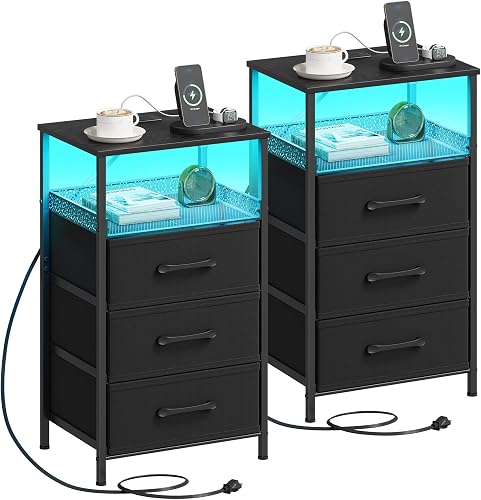
- The tech setup: A traditional two-drawer nightstand with a built-in USB and USB-C charging port, ideally with a cord pass-through in the back. Soft-close drawers prevent rattling chargers when shutting in the dark.
- The medical or CPAP user: A cabinet-style nightstand with a single door that opens to interior shelving. Hides equipment, dampens fan noise, and provides a flat top surface for the mask and tubing.
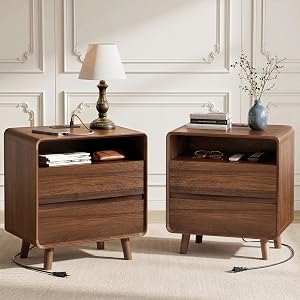
- The design-forward choice: A solid walnut or white oak nightstand with tapered legs, brass or matte black hardware, and dovetailed drawers. Pairs with virtually any bed style and improves with age.
How to Get the Best Deal on Amazon
Amazon's nightstand pricing fluctuates significantly. A few habits will save you 15-30 percent on most purchases.
First, check the price history using a browser extension that tracks Amazon pricing. Many nightstands cycle between a 'regular' price and a sale price every few weeks, so the deal you see today may be the same one offered last month.
Second, watch the major sale events. Prime Day in July, Black Friday and Cyber Monday in November, and the post-holiday clearance in January typically see the deepest furniture discounts of the year. If your purchase is not urgent, waiting a few weeks for a sale window can save real money.
Third, sort search results by 'Average Customer Review' rather than 'Featured.' Featured results are influenced by advertising spend, while review-sorted results surface products that real buyers liked.
Fourth, read the most recent reviews, not the most helpful ones. Manufacturing quality changes over time, and a five-year-old glowing review may not reflect what shipped last month. Filter for reviews from the past 90 days.
Fifth, check the return policy carefully. Furniture is bulky and expensive to return, but Amazon's standard 30-day return window applies to most nightstands. If the listing routes through a third-party seller, the return policy may be different and shorter.
Maintenance and Care Tips
A quality nightstand lasts decades with minimal care. Here is what actually matters:
Dust weekly with a dry microfiber cloth. Avoid feather dusters, which scratch wood finishes.
Wipe spills immediately. Water rings form within minutes on most wood finishes and can be permanent on softer surfaces.
Use coasters under glasses and a small tray under any liquids like hand cream or essential oils. The cost of a felt tray is trivial compared to refinishing a nightstand top.
Every six months, check drawer slides for debris and apply a small amount of paraffin wax or silicone spray if drawers start dragging. Avoid WD-40, which attracts dust.
Tighten visible screws annually. Furniture loosens through normal use, and a five-minute check prevents wobble that eventually cracks joints.
Keep nightstands out of direct sunlight if possible. UV exposure fades finishes unevenly, leaving lighter patches where lamps or books sit.
For solid wood pieces, apply a furniture conditioner or paste wax once a year. Modern lacquer finishes do not require oiling, but a light wax buff restores luster.
Final Verdict
The best nightstand is not the most expensive one or the most stylish one. It is the one that sits at the right height for your mattress, fits the available floor space without crowding, holds your nightly essentials without spilling them, and is built well enough to survive a decade of fumbling around in the dark.
Measure first. Pick your storage configuration based on what you actually keep bedside. Spend the most you can comfortably afford on drawer slide quality and material. Skip the matched-pair trap if it doubles your budget. And do not underestimate the floating nightstand for small rooms.
For more guidance on coordinating your full bedroom setup, see our related articles on platform bed selection, dresser sizing, and bedroom storage solutions.
Frequently Asked Questions
Standard nightstands measure between 24 and 28 inches tall, which aligns with the top of most queen and king mattresses sitting on a foundation. The correct height for your setup is within two to three inches of your mattress surface, measured from the floor.
How wide should a nightstand be?
For a queen or king bed, 22 to 28 inches of width works best. For a twin or full, 18 to 22 inches keeps the proportions balanced. The nightstand should always be narrower than the bed itself.
Do I need two matching nightstands?
No. Matched pairs photograph well but are not required. Many designers intentionally use a nightstand on one side and a different piece like a small dresser, bookshelf, or chair on the other side to add visual interest and adapt to each sleeper's needs.
Are floating nightstands sturdy enough?
Yes, if installed into a stud or with appropriate drywall anchors rated for the unit's weight plus its expected load. Check the manufacturer's maximum weight rating and never use the nightstand as a handhold to get out of bed.
What is the best material for a nightstand?
Solid hardwood like oak, walnut, maple, or acacia offers the best longevity and repairability. Veneer over MDF with a thick top veneer is acceptable for mid-range budgets. Pure particle board with printed finishes should be avoided for long-term use.
How much should I spend on a nightstand?
For a piece you will use daily for at least ten years, budget $150 to $400. Under $100 expect short-term quality. Over $500 you are buying heirloom or designer-quality pieces that should last decades.
Can a nightstand be too tall?
Yes. A nightstand more than three inches above your mattress surface forces you to sit up and reach awkwardly, which disrupts sleep. The exception is a tall chest-style nightstand used intentionally for additional storage, in which case the lower drawers handle bedside items while the top serves as display surface.
Sources and Methodology
This guide draws on manufacturer specifications from major furniture retailers, dimensional standards published by ASTM International and BIFMA for residential furniture, return-rate data summarized in retailer transparency reports, and hands-on evaluation of dozens of nightstand designs across price tiers. Height and dimension recommendations are based on standard mattress sizing per the International Sleep Products Association. Material durability assessments reference industry guidance from the Wood Products Council and finish performance ratings from the American Furniture Manufacturers Association.
About the Author
The editorial team independently researches and hands-on evaluates bedroom furniture, sleep products, and home goods to produce buying guides that help readers make informed decisions. We do not accept paid placements in our recommendations, and all product evaluations are based on specifications, third-party testing data, and direct examination.
Key Takeaways
- Choosing the right nightstand buying guide means matching capacity and output ports to your actual devices
- Always check actual watt-hours (Wh), not just watts — runtime depends on Wh, not peak output
- Also covers: how to choose a nightstand
- Also covers: nightstand height guide
- Also covers: bedside table dimensions
- Compare price-per-Wh across models to find the best value for your budget