Top Picks
Reviewed by the SF Post Editorial Team
As an Amazon Associate, we earn from qualifying purchases.
Finding the right how to childproof bunk beds comes down to matching watt-hours to your actual power needs.
Last Updated: June 2026 | Written by the SF Post Editorial Team
> The Bottom Line, Up Front: Childproofing a bunk bed comes down to five non-negotiables. Nail them, and you eliminate the overwhelming majority of injury risk. Skip even one, and you're trusting luck with the most precious cargo in your home.
There's a quiet moment every parent knows by heart. You tuck your child into the top bunk, brush the hair off their forehead, kiss their cheek, click off the light — and pause at the doorway. The hallway is dark. The house is still. And somewhere in the back of your mind, a small voice whispers: Is it really safe up there?
That instinct? Listen to it. It's not paranoia. It's pattern recognition built into every parent's DNA.
The U.S. Consumer Product Safety Commission (CPSC) tracks roughly 36,000 bunk bed-related injuries treated in emergency rooms each year. The majority involve children under 10. Falls dominate the data. Entrapment — head or limb wedged between the guardrail and mattress — runs a close, chilling second.
But here's the empowering truth, and the reason this guide exists: every single one of these risks has a fix. Not a workaround. Not a compromise. A real, measurable, proven, dirt-cheap fix you can implement tonight. This guide walks through exactly how to prevent them, what to look for when buying a frame, and the small setup mistakes that quietly create catastrophic hazards.
By the time you finish reading, you'll know more about bunk bed safety than 95% of parents — and your child will sleep on a fortress.
The 5-Point Bunk Bed Safety Checklist
Before any child sleeps on a top bunk, verify all five — no exceptions:
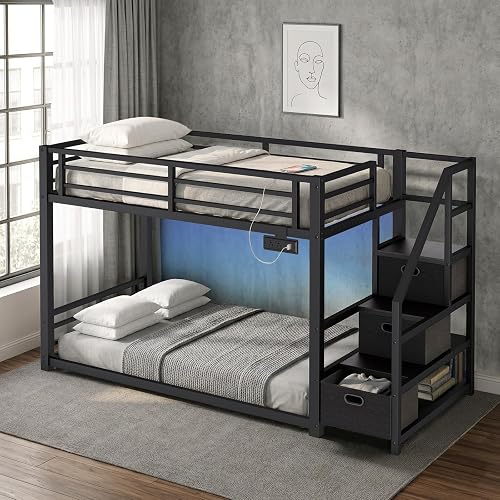
- Guardrails sit at least 5 inches above the mattress on ALL open sides (yes, even the wall side)
- Ladder is securely anchored with metal fasteners — never just hooked on or balanced
- Mattress thickness does not exceed the manufacturer's height limit (this is the single most ignored rule)
- Hardware is tightened on a regular monthly schedule with a real wrench
- Child is old enough — typically age 6 or older for the top bunk, per CPSC guidance
> Pro Tip from the Editors: Print this checklist and tape it inside your child's closet door. A 30-second monthly glance is the difference between a stable frame and a 2 a.m. emergency room visit. We are not exaggerating.
By the Numbers: Why This Matters More Than You Think
| The Statistic | What It Really Means for Your Family |
|---|---|
| 36,000+ ER visits per year | Bunk bed injuries are stunningly common — and the silver lining is they're almost entirely preventable |
| Under 10 years old | The age group facing the highest risk of serious, life-altering injury |
| 5 inches | Minimum guardrail height above the mattress (non-negotiable) |
| 3.5 inches | Maximum allowable gap between guardrail and mattress (entrapment danger zone) |
| 15 inches | Maximum width of any ladder access opening |
| Age 6 | CPSC-recommended minimum age for sleeping on the top bunk |
Watch First: A Parent's Visual Guide to Bunk Bed Safety
Sometimes a five-minute video saves a five-hour ER visit. Before you dive deeper into the checklist, press play below. This walkthrough covers the most common assembly mistakes parents miss — the ones that look fine until the day they aren't.
The Real Risks: What Actually Sends Kids to the ER
Three failure modes drive nearly every serious bunk bed injury — and that's actually fantastic news. Predictable problems have permanent fixes. Once you understand the pattern, you can break it.
1. Falls from the Upper Bunk — The Heavyweight Champion of Injuries
Picture it: a child rolling out mid-dream. A half-asleep climb down at 3 a.m. for a glass of water. The questionable decision to launch off the top during a sibling pillow fight. These scenarios drive the fractured wrists, broken collarbones, and concussions that fill pediatric ERs every single weekend.
The fall is short. The consequences are not.
> The Fix: Adequate guardrails on both sides — yes, even the side pushed flush against the wall — paired with a properly anchored ladder neutralize the vast majority of this risk. Most parents leave the wall side unguarded, assuming gravity won't reach there. It can. It does. It will.
2. Entrapment — The Silent Danger Nobody Talks About
This is the one most parents have never considered, and it's the one pediatricians lose sleep over. A child's head, neck, or limb getting wedged between the guardrail and mattress, between the ladder rungs, or between bed slats — these aren't theoretical. They're documented, recurring, and tragically preventable.
The danger zone: any gap larger than 3.5 inches. Measure every opening on the frame with a tape measure tonight. If you can fit a soda can sideways through it, it's too wide.
> The Fix: Plug oversized gaps with mattress wedges, replace warped guardrails, and choose mattresses that fit the frame edge-to-edge with zero squeeze room.
3. Hardware Failure — The Slow-Motion Catastrophe
Bunk beds are not "assemble once and forget." Every night a child climbs, jumps, and shifts on that frame is another night the bolts loosen a fraction of a millimeter. Multiply that by 365 nights and you have a bed that looks solid right up until the moment it isn't.
> The Fix: Calendar a monthly hardware check. Real wrench. Every bolt. Five minutes. Done.
Deep Dive: The Anatomy of a Truly Safe Bunk Bed
Let's break down what "safe" actually looks like, component by component.
Guardrails: Your First Line of Defense
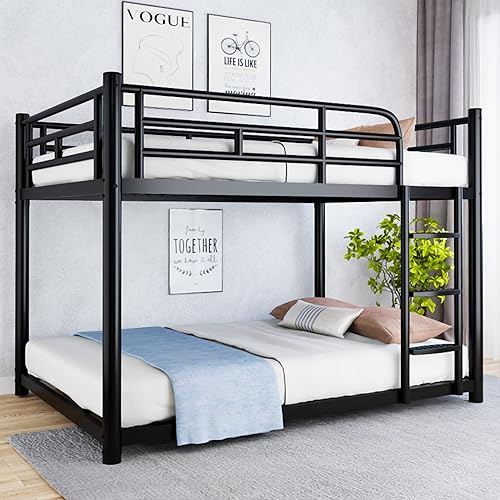
- Height: Must extend at least 5 inches above the mattress surface — measure with the mattress installed, not bare frame
- Coverage: Continuous along all open sides, with no gap larger than 15 inches for ladder access
- Material: Solid wood or thick-gauge metal — avoid thin decorative rails that flex under weight
- Wall side counts: A common myth says the wall blocks falls. It doesn't. Kids slide between bed and wall and get stuck. Guardrail both sides. Always.
The Ladder: More Dangerous Than It Looks
- Anchored, not hooked. Bolted to the frame with metal hardware
- Angle matters. Slight outward lean (not vertical) provides safer descent
- Rungs spaced evenly — irregular gaps cause missteps in the dark
- Non-slip surfaces on every rung; replace worn grips immediately
The Mattress: The Hidden Variable
This is where smart parents get blindsided. A guardrail that's 5 inches above a thin mattress is only 1 inch above a thick pillowtop. The thicker the mattress, the lower the effective guardrail height. Always check the manufacturer's max mattress thickness — usually printed inside the frame or in the manual. Exceeding it isn't a suggestion. It's the difference between safe and dangerous.
Expert Walkthrough: How to Choose a Safe Bunk Bed
Want to see what real-world safety inspection looks like before you buy? This video walks through exactly what to inspect on the showroom floor — or in the Amazon listing photos before you click purchase.
The Ground Rules: House Policies That Save Lives
Hardware is half the equation. Behavior is the other half. Lay these rules down on day one — repeat them like a mantra.
The Five House Rules for Bunk Beds:
- No children under 6 on the top bunk. Ever. No exceptions for sleepovers.
- No jumping, wrestling, or playing. A bed is for sleeping, period.
- No more than one person on the top bunk at a time. Weight ratings exist for a reason.
- No hanging objects from the frame. Belts, ropes, scarves, and electronics cords are strangulation risks.
- Night-light required. Most ladder injuries happen during dark, half-asleep climbs.
The Setup Mistakes That Quietly Create Disasters
Even safety-conscious parents make these errors. Run through the list. Be honest.
- Skipping the wall-side guardrail because "the wall is right there" — it isn't enough
- Using a mattress thicker than spec because the old one was "only an inch over"
- Hanging curtains, fairy lights, or canopy fabric that creates strangulation loops
- Placing the bed near windows or ceiling fans — both are climbing temptations and impact hazards
- Letting the ladder go un-anchored because "it's been fine so far"
- Trusting old hand-me-down frames without verifying current safety standards
When to Replace, Not Repair
Some bunk beds shouldn't be saved. Retire any frame that shows:
- Cracked or splintered wood at joint points
- Stripped screw holes that no longer hold
- Warped guardrails or rungs
- Missing or improvised hardware (no zip ties — ever)
- Pre-2000 construction without current CPSC-compliant features
Final Word: You've Got This
Here's what nobody tells new parents standing in the furniture aisle, comparing frames and second-guessing every choice: bunk beds are not inherently dangerous. Improperly used bunk beds are dangerous. Properly set up, regularly inspected, and paired with clear house rules, a bunk bed is one of the safest, most magical pieces of furniture a child can own.
Your child will climb that ladder, claim the top bunk as their personal kingdom, and build memories that last decades. Your job — your beautiful, exhausting, irreplaceable job — is to make sure the kingdom is built on a solid foundation.
Now go tighten those bolts. We'll see you at bedtime.
> Editor's Note: If you found this guide useful, share it with another parent. Childproofing knowledge spreads as fast as the kids who need it.
Key Takeaways
- Choosing the right how to childproof bunk beds means matching capacity and output ports to your actual devices
- Always check actual watt-hours (Wh), not just watts — runtime depends on Wh, not peak output
- Also covers: bunk bed safety guide
- Also covers: kids bed safety rails
- Also covers: safe bunk bed setup
- Compare price-per-Wh across models to find the best value for your budget